
Look underneath it before you sign.
The legal checks that decide whether a Spanish property is a home or a problem you inherited — the Nota Simple, the hidden debts, the licences, who really owns it — done before you pay a deposit. Because in Spain the debts follow the property, not the seller. In plain English, while the deal can still be fixed or dropped.
Everyone in the room wants the sale to happen. The checks are the one part of the process that don’t care whether it does — which is precisely why they’re worth doing first.
The checks that find the problem while it’s still fixable
Four investigations decide whether a Spanish purchase is safe. We run all four before a euro of your money is committed.
The Nota Simple — who really owns it
We pull the Nota Simple from the Registro de la Propiedad: the true owner, whether they can actually sell, and every mortgage, charge (carga) or embargo registered against the property. If a name or a lien doesn’t match the story you were told, you hear it before you sign, not after.
Outstanding debts
Unpaid IBI (council tax), community (comunidad) fees in arrears, and utility bills left running. These matter because in Spain some of them attach to the property itself — so we surface every euro owed and get it cleared or retained from the price at completion.
Licences & planning
The licencia de primera ocupación or cédula de habitabilidad, and confirmation that the pool, the extension or the reform was built legally — not sitting on an infracción urbanística the town hall could act on. A gorgeous villa with an unlicensed wing is a gorgeous liability.
Reality vs. the registry
That the built square metres, boundaries and description on paper match the property in front of you — and who is actually living in it. A sitting tenant, an undeclared occupant or a garden strip that belongs to the neighbour all change what you are really buying.
Which debts and charges attach to the property, and the licences a property must hold, are set by current Spanish law and verified for the specific property you’re looking at.
From an address to a straight answer
You send us the property
The address, the reference (referencia catastral) if you have it, and whatever the agent has given you. That’s enough for us to start — before any deposit, before any arras, before you’re committed to anything.
The registry & town hall search
We order the Nota Simple, check the ownership, mortgages, charges and embargos, and query the town hall on licences, planning and any urbanistic issue. The paper trail, read by someone whose only client is you.
Debts, community & occupancy
We chase down IBI arrears, the community fee position and its statutes, utility standing, and whether anyone has a right to occupy. The quiet liabilities that don’t appear in a brochure.
The plain-English verdict
A written report telling you exactly what we found and what it means: proceed, renegotiate or walk away. If you proceed, this rolls straight into the conveyancing, so nothing is checked twice.
Due diligence is usually the first phase of the full conveyancing, and pairs naturally with a power of attorney so we can act for you without you flying over.
The questions we get first
What is property due diligence in Spain?
It’s the set of legal checks carried out before you sign or pay a deposit, to confirm that the property is legally what it appears to be. In practice that means pulling the Nota Simple from the Land Registry to verify ownership and any mortgages or charges, checking for unpaid IBI, community fees and utilities, confirming the first-occupation licence and that any pool or extension is legal, and making sure the description on paper matches the property and no one has a right to occupy it. The point is to find the problems while you can still walk away — not to promise there are none.
In Spain, do the seller’s debts really become mine?
This is the trap that catches foreign buyers, and it’s why the checks matter so much. Under Spanish law certain debts and charges attach to the property itself rather than to the person — an outstanding mortgage, IBI (council tax) and community fees in arrears can follow the property to the new owner regardless of who ran them up. So a bargain with three years of unpaid comunidad behind it isn’t a bargain. Our job is to find every charge in advance and make sure it’s paid off or retained from the price at completion, so you take the keys clean.
What exactly do you check?
Ownership and description via the Nota Simple from the Registro de la Propiedad; every mortgage, charge and embargo registered against the property; unpaid IBI, community fees and utility arrears; the licencia de primera ocupación or cédula de habitabilidad; whether any pool, extension or reform is legal or an infracción urbanística; the community statutes and fee position; and whether the built reality and occupancy match what you’re being sold. If something is wrong, you get it in plain English before you commit.
How is this different from conveyancing?
Due diligence is the investigation; conveyancing is the whole purchase. Due diligence is usually the first phase of the conveyancing — the checks that decide whether the deal is safe — done before any real money moves. Some buyers want just the checks on a specific property before they get in deeper; others instruct us for the full purchase from the start. Either way the work isn’t duplicated: if the checks come back clean and you proceed, they flow straight into completion.
Can you do the checks if I’m still in the UK?
Yes — that’s the normal situation, and none of it requires you to be in Spain. We can run the entire investigation remotely from the property details, and if you then go ahead, a notarised power of attorney lets us handle the reservation, the arras and completion without you flying over for every signature. You keep every decision; we handle the legwork on the ground.
Can you promise the property has no problems?
No honest lawyer can, and anyone who does should worry you. What we can do is look properly, in the right places, before you’re committed — and tell you plainly what we find. Most properties check out fine. Some come back with a fixable issue we renegotiate or make a condition of completion. A few come back with something that means you should walk, and finding that out before the deposit is exactly the point.
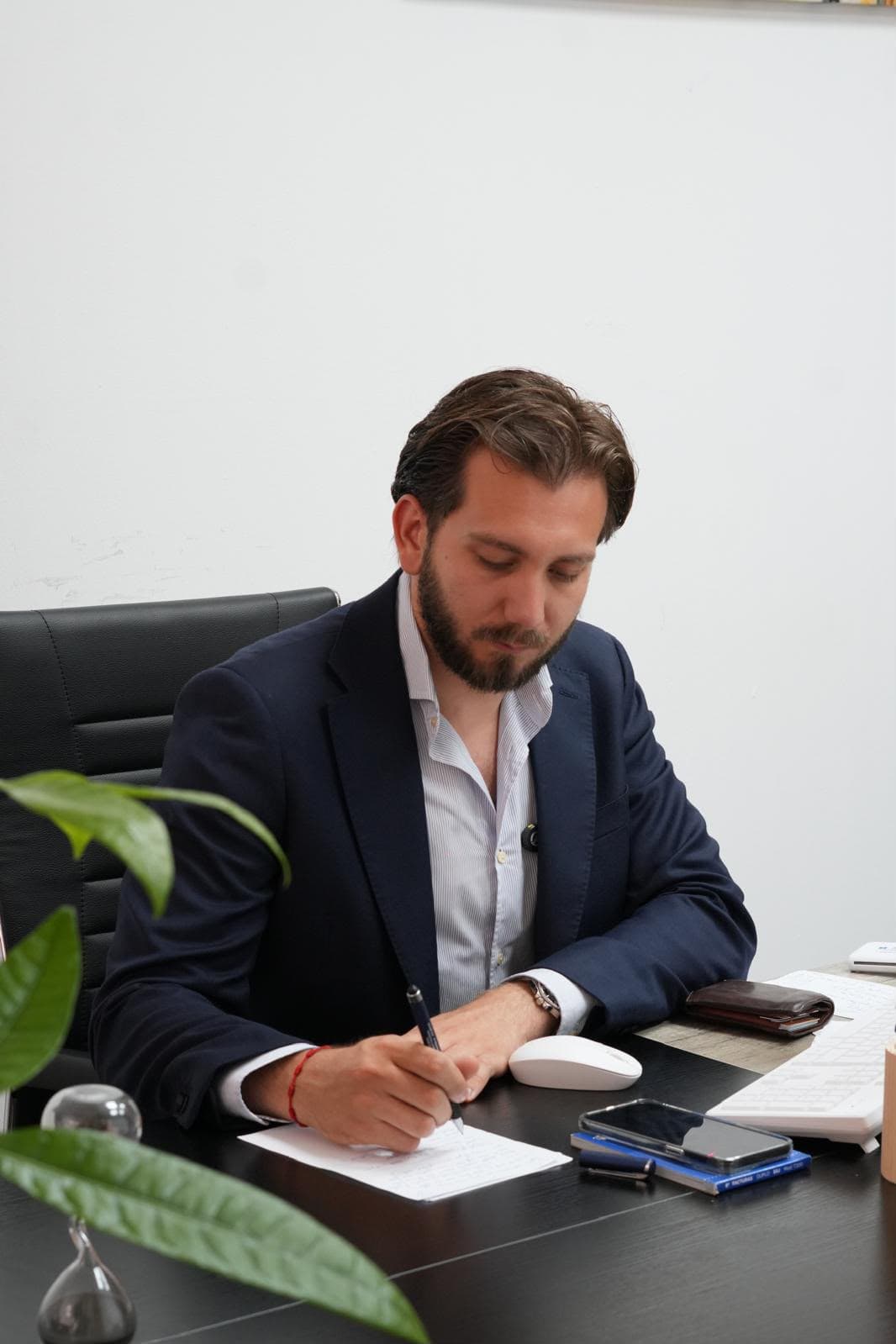
Reviewed by a lawyer
Reviewed by Alberto García López
Immigration lawyer · ICA Málaga, reg. no. 11.441
We check every page against current Spanish law. This is general information, not advice on your individual case.
Globalium is an independent law firm, not a government agency, and is not affiliated with or endorsed by any public administration. Visas, permits and identification numbers are granted solely by the Spanish authorities, and you are free to apply to them directly yourself. Our fees pay for legal advice and representation, and are separate from any official fee or tax.

Send us the property. We’ll look underneath it.
A proper read of the title, the debts and the licences — and a plain verdict on whether to proceed, renegotiate or walk — before you commit a euro.
+34 667 77 02 19 · infoglobalextranjeria@gmail.com
P.S. — the checks cost a fraction of the deposit, and a tiny fraction of the debt you’d otherwise inherit. It’s the cheapest look you’ll ever take at the most expensive thing you’ll ever buy.