
Buy in Spain without living at the airport.
A notarised power of attorney — the poder notarial — lets us sign the deed, get your NIE, pay the taxes and open the account for you, without a flight for every signature. It grants only the powers you choose, it’s revocable, and we act strictly within it. In plain English, from the drafting to the day it’s done.
A Spanish purchase needs you in a dozen rooms on a dozen days. A power of attorney is how you’re in all of them — without leaving your own kitchen.
What a power of attorney lets us do for you
Four things, each of which otherwise needs you standing in a Spanish office in person. The poder puts our signature where yours would have to be — within the limits you set.
Sign the purchase deed (escritura)
The core of it: your lawyer can attend the notary and sign the escritura de compraventa on your behalf, so completion happens on the agreed date whether you’re in Manchester or on a plane. You approve the terms in advance; we execute the signature.
Act for you on the NIE & the taxes
A power of attorney lets your lawyer act on your behalf on the NIE application, settle the transfer tax (ITP) or VAT, and present the paperwork at the registry — the administrative spine of a purchase that all has to be done in person in Spain, or by someone authorised to act for you.
Open the bank account & sign utilities
The everyday plumbing of owning a Spanish home: opening the account the purchase runs through, and putting water, electricity and the community over into your name. Small jobs individually, each one a separate trip if nobody can act for you.
Only the powers you choose
You decide the scope. A special power written for one purchase authorises exactly that and nothing more; a broader general power covers wider affairs if you want it. It says what we may do — and, by omission, everything we may not.
The powers granted, the form of the deed and the way it must be legalised are set by current Spanish law and drafted to fit your specific purchase.
From drafting to done — and revocable throughout
We draft the powers
We write the poder to fit your purchase — naming what may be signed, paid and registered, and no more. You read it in English and approve every clause before anything is signed.
You sign it — wherever you are
At a notary in Spain, or in your own country and then apostilled and sworn-translated, or at a Spanish consulate near you where it’s issued in Spanish already. We tell you the cleanest route for where you live.
We act within it
With the poder in hand we run the purchase on your instructions — the escritura, the NIE application, the taxes, the account, the utilities — reporting back at each decision. You keep the choices; we handle the signatures.
It ends when you say
A power of attorney is revocable. Once the job is done, or the moment you decide, it can be cancelled before a notary. It was never a blank cheque and never open-ended unless you wanted it so.
A power of attorney is the authority that makes a remote purchase work — pair it with our property conveyancing and your NIE for property buyers and the whole thing can complete while you stay home.
The questions we get first
What is a power of attorney (poder notarial) in Spain?
It’s a notarised document in which you authorise someone — here, your Spanish lawyer — to carry out specific acts for you: signing the purchase deed, obtaining your NIE, paying the transfer tax, opening a bank account, signing utility contracts. It’s the legal instrument that lets a cross-border purchase complete without you being physically present for every signature. Crucially, it grants only the powers written into it, so it’s a defined authority rather than an open hand.
Do I lose control if I give my lawyer a power of attorney?
No — and this is the fear worth answering plainly. A poder is scoped: it authorises the acts you list and nothing else, so a special power drafted for one purchase can’t be used for anything beyond it. You approve the terms of the deal before we act, we report at each decision point, and the document is revocable at any time before a notary. A reputable firm acts strictly within the mandate; the paperwork simply spares you the flights.
How do I grant one if I’m not in Spain?
Three routes. You can sign it before a notary while you’re in Spain. You can sign it before a notary in your own country, then have it apostilled under the Hague Convention and sworn-translated (traducción jurada) into Spanish. Or you can sign it at a Spanish consulate abroad, where it’s drawn up in Spanish from the outset and needs no translation. Which is cleanest depends on where you live and your timetable — we’ll tell you which to use.
What’s the difference between a special and a general power?
A special (or specific) power authorises named acts — typically everything needed to complete one property purchase and register it. A general power is broader, covering wider affairs such as ongoing tax, banking or a future sale. Most buyers only need a special power for the purchase, and we usually recommend keeping it that narrow: it does the job and limits the authority to exactly what the job requires.
Can I cancel a power of attorney once it’s granted?
Yes. A power of attorney can be revoked at any time by signing a revocation before a notary, and it also lapses naturally once its purpose is spent. You’re never locked in. If you’d prefer, a power can even be drafted to expire on a date or on completion, so it switches itself off when the purchase is done.
How does this fit with the conveyancing and my NIE?
It’s the piece that makes a remote purchase actually work. The power of attorney is what lets us run the full conveyancing — the registry checks, the deposit contract, the escritura — and act for you on the NIE application without you flying over for each step. Think of the poder as the authority, and the conveyancing and the NIE as the work it authorises us to do.
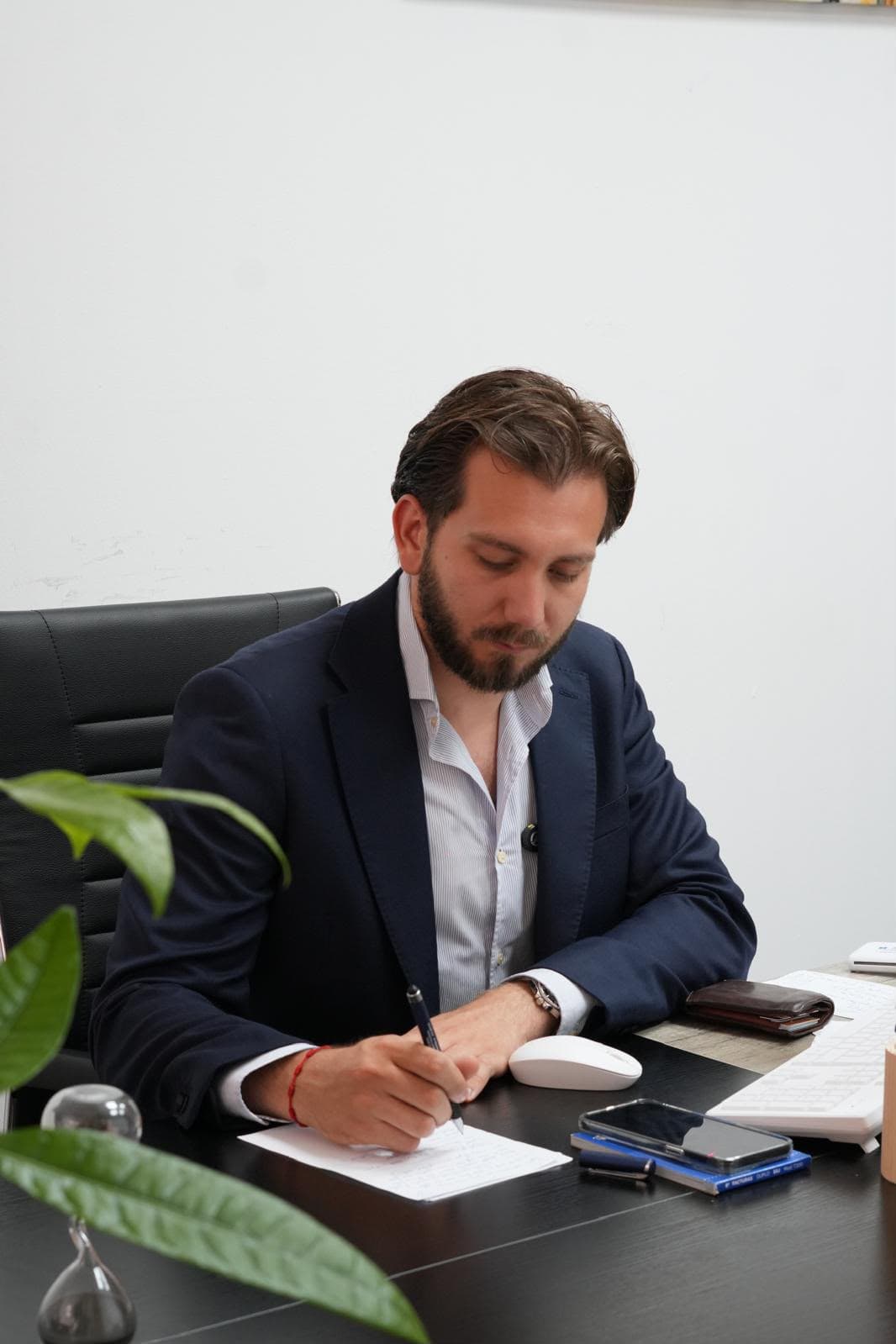
Reviewed by a lawyer
Reviewed by Alberto García López
Immigration lawyer · ICA Málaga, reg. no. 11.441
We check every page against current Spanish law. This is general information, not advice on your individual case.
Globalium is an independent law firm, not a government agency, and is not affiliated with or endorsed by any public administration. Visas, permits and identification numbers are granted solely by the Spanish authorities, and you are free to apply to them directly yourself. Our fees pay for legal advice and representation, and are separate from any official fee or tax.
Tell us what you’re buying. We’ll draft the authority.
A clear read on which power you need, how to grant it from where you live, and what it lets us handle — scoped to your purchase and revocable throughout.
+34 667 77 02 19 · infoglobalextranjeria@gmail.com
P.S. — the poder is a page. What it buys you is not having to book four flights to be in four rooms. Sign once, in one place, and let the tide come in.