
Your Spanish Digital Nomad Visa Was Refused? The Alternative That Could Save Your Move to Spain
Digital Nomad Visa refused? For some freelancers, Spain's self-employed residence permit is the route nobody mentioned. When it works, when it doesn't — honestly.
The email arrives, you skim past the polite Spanish officialese, and there it is: denegada. Refused. And somewhere between the second read and the third, a thought settles in that we hear on the phone every week, in exactly these words: "So that's it, then. Spain's off."
Let us stop you right there, because that conclusion is very often wrong — and not in the consoling, everything-happens-for-a-reason way. Legally wrong. Spain has more than one door for people who work for themselves, and the Digital Nomad Visa is merely the one with the best marketing. There is another permit — the self-employed residence and work authorisation (residencia y trabajo por cuenta propia) — that almost nobody googles, almost no Facebook group mentions, and that, for a specific kind of freelancer, fits better than the DNV ever did.
Now the honest bit, before the hopeful bit runs away with itself: the self-employed permit is not a consolation prize, and it is not automatic. It exists for a different purpose, demands different evidence, and suits a different profile. Presenting it as "the backup DNV" is exactly the kind of half-advice that produced your first refusal. What it is, is a genuine alternative for the freelancer whose working life was never really "remote work for foreign clients" in the first place — and a fair number of refused applicants discover, on proper review, that they were that freelancer all along.
Why do so many Digital Nomad Visas get refused?
Spain doesn't publish a tidy league table of refusal reasons, so treat anyone quoting precise rejection percentages with suspicion. What we can tell you is what actually appears in the refusal letters that land on our desks. The patterns are remarkably consistent.
The social security wall. The single biggest killer, and the least understood. Spain wants proof that while you work from its soil, someone is lawfully covering your social security — a certificate of coverage from a country with the right agreement, or registration in Spain. Files that wave vaguely at this pillar don't get the benefit of the doubt; they get refused. Americans, whose totalization agreement doesn't cover the remote-work scenario, hit this wall hardest.
Spanish clients over the line. Freelancers may bill Spanish clients up to roughly 20% of total income. Applicants whose invoicing tells a more local story — a Madrid retainer that grew, a Barcelona agency that became the anchor — get refused on the visa's core premise: this is a permit for international telework. If your income is meaningfully Spanish, the examiner's conclusion is that you're not a digital nomad; you're a self-employed worker in Spain without the right permit. (Hold that thought. It's the whole point of this article.)
Income that doesn't hold up. Not just falling below the ~200%-of-minimum-wage threshold, but income evidence that wobbles: irregular freelance revenue presented without clear monthly arithmetic, currency conversions left as homework for the examiner, contracts that don't state amounts, income sitting at the exact minimum with no buffer for a sceptical reading.
The relationship and the company. Client or employer relationships younger than three months; client companies that can't show a year of real existence; and the classic — the applicant invoicing through their own single-member LLC who presents themselves as an "employee" of a company that is, in substance, just them. Examiners have seen that film and they know how it ends.
Qualification gaps. No degree, and a patchy tale of the three years' professional experience told through a CV rather than through contracts, invoices and references that actually evidence it.
Paperwork logistics. Criminal-record certificates past their validity, missing apostilles, translations done by someone who isn't a sworn translator, insurance that doesn't meet the full-coverage standard. Boring, avoidable, fatal.
Notice something about that list: several of the most common refusal grounds — Spanish clients, local economic substance, self-employment dressed as employment — aren't really failures to be a good digital nomad. They're evidence that the applicant was never quite a digital nomad to begin with.
First, the mechanics of a refusal (the clock is already running)
Deadlines start at notification, not at acceptance. A refusal notified through a consulate opens a one-month window for a reconsideration appeal to the same office, and a two-month window for judicial review before the courts in Madrid; in-country refusals follow the ordinary administrative rules with the same order of magnitude. Grief is understandable; grief that lasts five weeks is a waived appeal.
Refusals come with reasons — read them like a lawyer, not like a rejection. Sometimes the grounds are solid. Often they're a documentary misreading (an income proof "not provided" that sits on page 40 of your file), a requirement applied that the regime doesn't actually impose, or a conclusion drawn without the clarification request the file deserved. Each of those is appealable material.
There is no blacklist. A refusal is not a mark against your character, nor a bar on future applications to the same permit or a different one. What does persist is the file itself: what you declared, what you evidenced. Future applications should be consistent with it, or honestly explain the change.
The fee is gone; the documents mostly aren't. Visa fees aren't refunded, which stings, but the expensive parts of your file — apostilled records still within validity, sworn translations, degree evidence — are largely reusable. A refusal costs you time and a fee. It doesn't send you back to zero unless you let the paperwork expire while you decide.
So: was your refusal a repairable defect in the right lane — or a category verdict pointing at the other one?
The alternative almost nobody knows: the self-employed permit
Spain's self-employed residence and work authorisation is the general-regime permit for people who want to run their own economic activity in Spain: freelancers, consultants, tradespeople, shop owners, professionals — the ordinary, honourable business of working for yourself, Spanish clients very much included. It predates the DNV by decades, it isn't glamorous, and it never had a launch campaign.
The premise is the opposite of the DNV's. The DNV asks you to prove your work is elsewhere: foreign employer or clients, at most ~20% Spanish income. The self-employed permit asks you to prove your work will genuinely happen here — a real professional activity, run from Spain, serving whoever your market is, including a market that is 100% Spanish.
What you must show. A credible business plan demonstrating the viability of the activity (this is the centrepiece); investment or resources to launch it, proportionate to what the activity actually needs — a consultant's laptop-and-clients setup is judged differently from a café fit-out; the professional qualifications or accredited experience the activity requires, and for regulated professions the corresponding Spanish recognition; projected income that at least sustains you, referenced against the minimum wage; plus the universal basics — clean criminal record, no irregular status, health coverage, and whatever licences the activity itself demands.
How it's processed. The standard route runs through a visa at the Spanish consulate in your country of residence, with the authorisation assessed by the immigration authorities in Spain: a slower, more traditional pipeline than the DNV's fast-track unit, measured in months rather than weeks. If you're already lawfully resident in Spain under another status, a modification to self-employment from inside the country may be available instead — a different procedural animal, assessed on its own requirements.
What you get. An initial authorisation shorter than the DNV's in-country three years — the first card is typically one year — but with generous renewals under the current Reglamento (renewal periods of up to four years), building exactly the same staircase: five years of legal residence to permanence, and residence that counts toward Spanish nationality. Your family can join you. And once you're operating, you're an autónomo like any Spaniard: full access to your market, the right to grow, no ceiling whatsoever on Spanish clients, and the ordinary employer's right to hire staff as the business grows.
The honest caveats, stated plainly. The evidential bar is real: a viable business plan is a document with numbers that survive scrutiny, not a paragraph of enthusiasm. The consular route is slower and more variable than the UGE's twenty working days. The initial card is shorter. And the Beckham tax regime — already out of reach for most DNV freelancers — is likewise not the self-employed applicant's regime: you'll be in the ordinary IRPF-and-quarterly-filings world from day one. This permit rewards people who are actually building something in Spain. It is a poor fit for people who merely want the DNV's outcome with less paperwork. There is no such permit, in Spain or anywhere else.
The business plan, dissected
The plan is where these applications live or die. Here's what "viable" looks like on an examiner's desk — the difference between a plan and a wish:
- A market you can point at. Not "Spain has many businesses needing design", but these client types, in this area, at these prices — ideally with letters of intent, existing contracts, or a pipeline that already produces revenue. The refused-DNV freelancer with 45% Spanish income has a superpower here: the market evidence already exists in their invoicing.
- First-year numbers that add up. Revenue projections tied to the pipeline, not to optimism. Costs that include the unglamorous ones — autónomo contributions, gestoría, insurance, quarterly taxes — and a bottom line that sustains you without heroic assumptions in month two.
- Resources proportionate to the activity. Spain isn't asking a consultant for a café's capital. It's asking whether what your activity needs — equipment, working capital, runway — demonstrably exists. Bank statements beat adjectives.
- You, credentialed for the work. Portfolio, track record, client references and, for regulated professions, the Spanish recognition of your qualification, sequenced before the application. A plan built on an unrecognised title is a plan built on sand.
- The boring compliance layer. Licences the activity needs, the registration path, premises if applicable. Examiners notice when an applicant has already understood the system they're asking to join.
A plan with those five layers doesn't guarantee approval — nothing does — but it changes the conversation from "is this person dreaming?" to "is there any reason to say no?" Which is the only conversation you want.
Two permits, two philosophies. The DNV says "your economy stays abroad; Spain is where you sit." The self-employed permit says "your economy moves here; Spain is where you work." Most refused applicants were sold the first without anyone asking which sentence actually described them.
Who should apply for the Digital Nomad Visa
The DNV remains the better instrument — often by a wide margin — when this describes you:
- Your income comes from an employer or clients genuinely based outside Spain, and that will remain true. The Madrid agency isn't about to become your main account.
- Your Spanish-source income is zero or comfortably under the ~20% line, with headroom.
- Your income is stable and clearly above the ~200%-of-SMI threshold (roughly €2,850 a month at current figures, more with family).
- You can solve the social security question cleanly — a certificate of coverage from your home system, or registering as autónomo in Spain for the freelance modality.
- You value speed and duration: applied for from inside Spain, the UGE decides in around twenty working days and the initial permit runs three years.
- You're an employee rather than a freelancer. The self-employed permit is, definitionally, not for employees — which makes the DNV your only self-serve lane of the two. (The full split is in our sister guide on employee vs freelancer.)
In short: if your working life genuinely lives abroad and merely wants a better view, the DNV was built for you, and a refusal in this profile usually means a fixable file, not a wrong lane. Appeal or reapply with the evidence repaired — don't switch permits out of pique.
Who should apply for the self-employed residence
The self-employed permit is the better instrument — sometimes the only honest one — when this is you:
- Your client base is, or wants to be, meaningfully Spanish. The 20% cap isn't a compliance detail for you; it's a handbrake on your actual business.
- Your next chapter involves local presence: clients you meet, premises, a studio, a workshop, services delivered in person — things no "international teleworker" narrative can honestly contain.
- You plan to grow in Spain: hire, open, scale, sign local contracts. The DNV tolerates your presence; this permit licenses your ambition.
- You can present a credible business case — plan, numbers, resources, qualifications — because you actually have one.
- Your DNV was refused for reasons that were really category errors: too much Spanish income, self-employment presented as employment, local economic substance. Those aren't defects to hide in a second DNV attempt; they're the qualifications for this permit.
- You're patient enough for the consular timeline and honest enough for the evidential bar.
One sentence to test yourself with: "If Spain vanished from my client list tomorrow, would my business survive?" If yes, you're probably a digital nomad. If no — if Spain is the market — you're self-employed in Spain, and there's a permit with your name on it.
And if the honest answer is that you don't need to work at all — funded by rent, investments or the proceeds of a sale — then neither of these permits is yours: the Non-Lucrative Visa is, and it has no age or pension requirement, whatever the internet told you.
The big comparison
| Variable | Digital Nomad Visa | Self-employed residence |
|---|---|---|
| Legal framework | Startups Law (Ley 28/2022 / 14/2013) | General regime (RD 1155/2024) |
| Core premise | Remote work for a foreign economy | Economic activity run in Spain |
| Who can apply | Remote employees and freelancers | Self-employed only |
| Spanish clients | ≤ ~20% of income (freelancers); none for employees | Unlimited — they're the point |
| Foreign clients | Required (the bulk of income) | Welcome, but not required |
| Income requirement | Projected viability that sustains you, evidenced by the plan | |
| Business plan | Not required | The centrepiece |
| Investment / resources | Not assessed | Proportionate to the activity, and assessed |
| Qualifications | Degree or 3 years' experience | Whatever the activity requires; regulated professions need Spanish recognition |
| Client seniority | Relationship ≥3 months; company ≥1 year | N/A — your business is new by definition |
| Decided by | UGE-CE (in-country) or consulate | Immigration authorities via consulate (or modification if already resident) |
| Speed | ~20 working days in-country, positive silence | Months; traditional pipeline |
| Initial duration | 3 years (in-country) / 1-year visa (consulate) | Typically 1 year |
| Renewals | +2 years, to 5 total | Renewal periods of up to 4 years |
| Permanent residency | Yes, at 5 years | Yes, at 5 years — same staircase |
| Counts toward nationality | Yes | Yes |
| Apply as a tourist in Spain | Yes (lawful stay suffices) | Not for the initial authorisation |
| Hiring employees | Not what the permit contemplates | Yes — ordinary employer rights |
| Opening premises | Off-script for a "teleworker" | Entirely natural |
| Social security | Certificate of coverage or autónomo registration | Autónomo registration, full stop |
| Beckham Law (24% flat) | Employees usually yes; freelancers usually no | No — ordinary IRPF |
| Typical refusal trigger | Social security, 20% breach, income evidence | Unconvincing business plan, viability, resources |
| Evidence style | Prove what you already earn | Prove what you will build |
| Pivoting to local work later | Requires changing permit | Already licensed for it |
| Ideal holder | Location-independent professional | Spain-facing freelancer or founder |
| Worst-fit holder | Anyone whose market is Spain | Anyone who just wants the DNV with less admin |
One pattern, twenty-five rows: these permits aren't rivals. They're different answers to different questions, and refusal statistics are substantially a census of people who answered the wrong one. If you'd rather answer a few questions than read a table, our route calculator points you at the right lane in about two minutes.
Six freelancers, six answers
John — UK developer, five British and American clients, zero Spanish income. DNV, clearly. His refusal (income arithmetic presented as a shoebox of invoices) is a presentation failure, not a category one. The right move is a repaired reapplication with a clean income schedule. Switching permits would mean inventing a Spanish business he doesn't have.
Sarah — designer, portfolio moved toward Spanish agencies, now 45% Spanish income and growing. Her refusal wasn't bad luck; it was an accurate reading. Sarah's business lives in Spain. The self-employed permit fits her like it was drafted for her: a plan built on the existing Spanish pipeline, contracts as viability evidence, autónomo registration as the destination she was heading toward anyway. The refusal letter was, in hindsight, career advice.
Michael — American consultant with a single-member LLC, presented as the LLC's "employee". The examiner saw through the structure: Michael is the company. Two honest paths — recharacterise and reapply for the DNV as a freelancer if his clients are genuinely American and he'll register as autónomo (the standard American workaround); or, if his real plan involves Spanish clients and local growth, the self-employed permit with the LLC's track record as the backbone of the business plan. Which one is right depends on where his market actually is, not on which permit sounds better at dinner.
David — copywriter whose Madrid retainer crept past the 20% line. David's DNV isn't refused yet — it's doomed at renewal on the current trajectory. His choice: cap the Spanish work and stay a nomad, or accept what his income is telling him and plan a switch before the renewal file forces the conversation on worse terms. Pre-emptive lane changes beat crash landings.
Emma — British physiotherapist opening a practice on the Costa del Sol. Emma never belonged anywhere near the DNV: physiotherapy in Fuengirola is the opposite of remote work for a foreign economy. A regulated profession adds a step — her qualification needs Spanish recognition before the business plan can stand on it. Self-employed permit, sequenced properly: recognition first, plan second, consulate third. Slower, but the only honest route to the practice she actually wants.
Anna — refused for a criminal-record certificate past its validity, clients 100% Canadian. Pure paperwork logistics. Her profile is a textbook digital nomad, and the self-employed permit would be a bizarre downgrade: no Spanish market, no business plan to write. Fresh certificate, fresh application, same lane. Not every refusal is a message; some are just an expired document.
Does a DNV refusal block the self-employed route?
Direct answer: not automatically — but not never, either. It depends entirely on why you were refused.
The two permits are separate procedures with separate requirements, and Spanish immigration law contains no rule that a refusal in one forecloses an application in the other. If your DNV fell because you didn't meet the digital nomad regime's specific requirements — too much Spanish income, no qualifying foreign relationship, the social security gap — that finding says nothing against a self-employment application, which doesn't have those requirements. Indeed, some refusal grounds (real Spanish economic activity) actively support the alternative narrative.
But three honest qualifications, because "you can always switch" is exactly the over-promise this article exists to avoid:
The refusal reason travels if it's universal. A refusal grounded in criminal records, irregular status, false documentation or public-order concerns will follow you into any procedure. Those aren't lane problems; they're file problems, and they need solving, not circumventing.
Consistency matters. The administration reads. An application that told the UGE "all my work is foreign", followed months later by one telling the consulate "my thriving business is Spanish", invites questions unless the evolution is real and documented. The switch works when it reflects your actual situation — ideally with the paper trail (contracts, invoices, timeline) that shows it.
There is no right to conversion. The self-employed permit is assessed on its own merits, from scratch: plan, viability, resources, qualifications. A refused DNV applicant starts that assessment at zero — neither penalised nor credited. If the business case isn't genuinely there, the second refusal simply arrives on different letterhead.
And don't forget the option everyone skips in the rush to Plan B: the appeal. Refusals built on documentary misreadings, or on requirements the law doesn't impose, are overturned more often than the forums believe. Sometimes the best alternative to a refused DNV is the same DNV, argued properly.
The mistakes that cause all of this
- Treating the two permits as interchangeable. They share a country and the word "residence". Everything else — premise, evidence, examiner, timeline — differs. Choosing between them is a legal characterisation of your working life, not a menu preference.
- Assuming any freelancer can pick either. A freelancer with zero Spanish market has no honest self-employment case; a freelancer whose income is half Spanish has no honest DNV case. Your invoices have already voted.
- Applying for the DNV because it's the one you've heard of. Permits don't get approved on PR; they get approved on fit.
- No business plan — or a decorative one. For the self-employed route, the plan is the application. "I'm good at what I do and Spain is lovely" is a mood, not a viability study.
- No proof of viability or resources. Enthusiasm is free; the examiner prices it accordingly.
- Ignoring the regulated-profession step. Health professionals, lawyers, architects: Spanish recognition of your qualification isn't an afterthought — for this route it's load-bearing, and it takes time. Sequence it first.
- Reapplying for the DNV unchanged. The second identical application meets the same law and, quite possibly, the same examiner. If nothing in the file changed, nothing in the outcome will.
- Skipping the appeal analysis. One month is short and grief is slow. Files arrive at our office with the reconsideration window already closed and a perfectly arguable refusal inside.
- Getting advice after the refusal instead of before the application. The cheapest hour of legal advice is the one before you file. The most expensive is the one after the second refusal.
The honest conclusion
A refused Digital Nomad Visa is a bad afternoon. It is very rarely the end of the Spanish plan — but what comes next should be chosen, not grabbed.
Three moves exist, and only your refusal letter knows which is yours: appeal, when the refusal misread your file or invented a requirement (one month — the clock is already running); reapply, when the defect was documentary and your profile is genuinely nomadic; or switch to the self-employed residence, when the refusal was really Spain telling you, in its bureaucratic dialect, that your business already lives here. The freelancers for whom the switch works aren't settling for less — they're applying, at last, for the permit that matches their actual life. The ones for whom it doesn't work deserve to hear that plainly before spending a euro on a business plan.
That sorting takes one honest conversation with your refusal letter and your client list on the table. It's precisely what we do first, in English, before anything is filed: a straight answer on which door is genuinely yours, what it costs, and how long it takes. Book a chat — in person on the Costa del Sol (Fuengirola, Marbella, Mijas, Benalmádena) or online everywhere else. More of the questions everyone asks are answered here, and once you're through the door, settling in is its own project.
Don't assume Spain said no to you. It may only have said no to the form.
P.S. — you will eventually meet the expat who was refused once, declared the entire Spanish state corrupt, and moved to Portugal out of spite. He now explains Portuguese bureaucracy at barbecues with the same fury, because the problem was never the country. It was applying for the wrong permit with great confidence. There's a lesson in there, and it costs less than a move to Portugal.
Frequently asked questions
Can freelancers apply for both the Digital Nomad Visa and the self-employed permit?
Not simultaneously, and not interchangeably — but a freelancer may be eligible for either, depending on where their clients are. Predominantly foreign clients point to the DNV; a Spanish or Spain-bound market points to the self-employed residence. Each is assessed on its own requirements.
Does a Digital Nomad Visa refusal block the self-employed route?
Not automatically, and not never. If your DNV failed on requirements specific to that regime — too much Spanish income, no qualifying foreign client relationship, the social security gap — nothing in that finding blocks a self-employment application. But universal grounds (criminal records, irregular status, false documentation) travel with you into any procedure.
Which permit is faster?
The Digital Nomad Visa, decisively: around twenty working days when applied for from inside Spain, with a three-year initial card. The self-employed route runs through the consular pipeline and is measured in months, with a one-year initial card. Speed is the DNV's advantage; scope is the self-employed permit's.
Can I work with Spanish clients on each permit?
On the DNV: only as a freelancer, and only up to roughly 20% of your income. On the self-employed permit: yes, without limit. Spanish clients are the natural habitat of that permit — they are the point of it.
Can I hire employees in Spain?
On the self-employed permit, yes — you are an ordinary business owner with ordinary employer rights. The DNV contemplates you as an international teleworker, not a local employer. If hiring in Spain is part of the plan, that fact alone tells you which permit you need.
Should I appeal my DNV refusal instead of switching?
Often, yes. Refusals built on a documentary misreading, or on a requirement the regime does not actually impose, are overturned more often than the forums believe. A consular refusal opens a one-month window for reconsideration and a two-month window for judicial review — the clock starts at notification, not when you feel ready. Read the letter before choosing your next move.
Which permit is better?
Wrong question, honestly asked — better for whom? The DNV is better for the location-independent professional whose economy stays abroad. The self-employed permit is better for the freelancer building a business in Spain. Refusals pile up precisely where people answer this by popularity instead of by profile.
This article is general information updated for 2026 and is not individual legal or tax advice. Immigration rules and income thresholds change; figures should be confirmed for your specific case.
Found this useful? Share it with someone who needs it.
Share on WhatsApp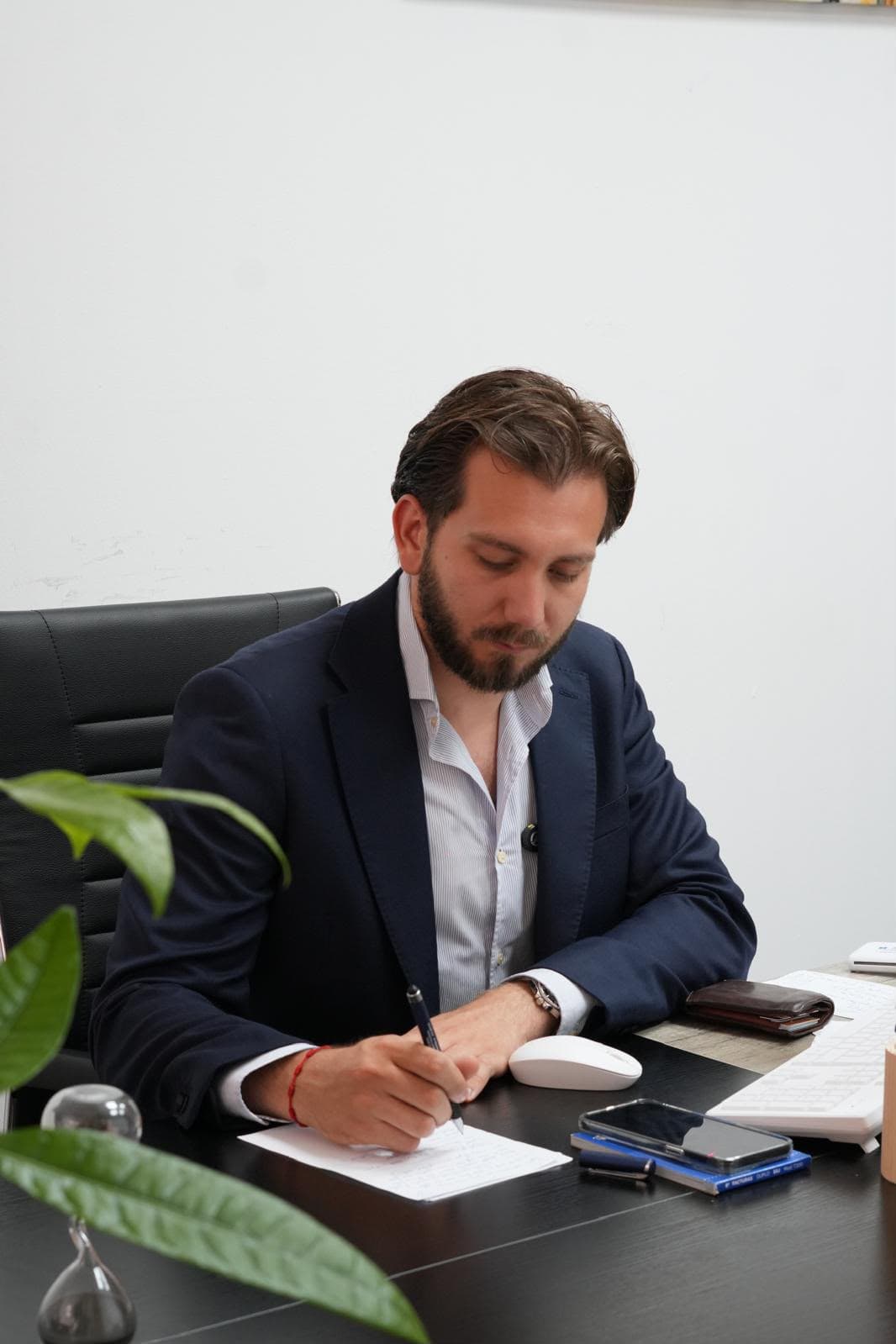
Reviewed by a lawyer
Reviewed by Alberto García López
Immigration lawyer · ICA Málaga, reg. no. 11.441
We check every page against current Spanish law. This is general information, not advice on your individual case.
Globalium is an independent law firm, not a government agency, and is not affiliated with or endorsed by any public administration. Visas, permits and identification numbers are granted solely by the Spanish authorities, and you are free to apply to them directly yourself. Our fees pay for legal advice and representation, and are separate from any official fee or tax.
Keep reading
Planning your move to the Costa del Sol?
Tell us your plan and we'll map the right route — in plain English, before you commit to anything.