
The Spanish self-employed permit — build the business here, not just the tan.
The route nobody googles: residence and work authorisation for freelancers and business owners who trade from Spain — Spanish clients, no 20% cap, and the right to hire. Independent lawyers build the business plan, take it through the viability report and represent you to the end. In plain English.
It is not the consolation prize for a refused Digital Nomad Visa. It is a different permit, for a different life — and for some people, the right one all along.
The self-employed requirements, in plain English
Four pillars — and unlike most permits, one of them is an argument, not a document. The business plan is the case.
A business plan that stands up
The heart of the file. It sets out the activity, the market, the investment, the projected income and the jobs it may create — and it is normally submitted to a professional or business organisation for a report on its viability. This is where applications are won or lost.
Qualifications or proven experience
Whatever your activity legally requires: a degree, a professional licence, membership of a colegio, or documented experience where no formal qualification exists. Regulated professions have their own gate, and it comes before immigration.
Investment and enough to live on
Proof of the funds committed to the business and of sufficient means for yourself and any family — evidenced, traceable and in your own name. The figures are set by current law and confirmed at the time you apply.
The clean-file basics
A criminal-record certificate (apostilled and sworn-translated), full private health insurance or Spanish social security cover, and the registrations the activity requires: RETA, tax census, licences.
Investment levels, income thresholds and documentary requirements are set by current Spanish law and verified at the time of application — they do change.
From first call to open for business
Is this really your route?
Before anything else we test the premise. Freelancers with clients abroad often belong on the Digital Nomad Visa; freelancers building a business here belong on this one. Filing the wrong one is the most expensive mistake in the process.
Building the plan
We shape the business plan, the investment evidence and the qualifications into a coherent file, and take it through the viability report. A plan written to convince an investor is not a plan written to satisfy an administration.
Filing & representation
We file the application, act as your legal representative and answer whatever is asked. The decision is the authorities’; the argument is ours.
Trading, and staying
RETA registration, the tax census, the TIE card — and then the renewal, which asks a blunt question: did the business you promised actually happen? We plan for that from day one.
Where your clients are decides which permit you need
Clients abroad, work done remotely, Spanish income under roughly 20%? That is the Digital Nomad Visa. Clients in Spain, a market here, employees perhaps? That is this permit — no cap, no fiction, no quarterly anxiety about which side of a percentage you landed on.
Most refusals we unpick started as a profile filed under the wrong regime. It is worth twenty minutes to get that call right, and we make it on the first conversation — before you spend a euro on apostilles.
The questions we get first
What is the self-employed visa, and how is it different from the Digital Nomad Visa?
It is the residence and work authorisation for people who will carry on an economic activity on their own account in Spain — an autónomo, a freelancer, a business owner. The Digital Nomad Visa is for remote work tied to companies or clients abroad, and caps Spanish-source income at roughly 20%. This permit has no such cap: Spanish clients are the point of it. The rule of thumb is simple — if your market is in Spain, this is your route.
Can I apply after a Digital Nomad Visa refusal?
Often, yes. A refusal grounded in requirements specific to that regime — too much Spanish income, no qualifying foreign employer, the social-security gap — says nothing about your eligibility here. Universal grounds (criminal record, irregular status, false documentation) do travel with you into any procedure. We read the refusal letter before recommending either an appeal or a change of route.
How much money do I need?
Two separate figures: the investment your business plan actually requires, and sufficient means to support yourself and your family. Both are set by current legislation and both must be evidenced, not asserted — traceable funds, in your name, with a documented origin. We confirm the exact thresholds applying when you file.
Does the business plan really matter that much?
It is the case. The plan is normally assessed for viability by a professional or business organisation, and a thin, generic or copy-pasted plan produces exactly the outcome you would expect. It has to be specific, costed and credible for the market you are entering — which is a different document from the one you would show a bank.
Can I hire employees?
Yes. You are an ordinary business owner with ordinary employer rights, and a plan that credibly creates jobs in Spain reads well. The Digital Nomad Visa contemplates you as an international teleworker, not a local employer — so if hiring here is part of the plan, that fact alone tells you which permit you need.
Can I get the Beckham Law tax regime on this permit?
Generally no. Self-employment carried on from Spain usually amounts to a permanent establishment, which the special regime excludes. There are narrow exceptions — a business activity certified as innovative, or a highly qualified professional serving certified startups. Outside those, you plan as an ordinary Spanish tax resident, with progressive rates but also full allowances, deductions and treaty access.
Can I bring my family?
Yes, with an uplift to the means you must show. We prepare the family applications alongside the main one so nobody is left in limbo while a business is trying to open.
How long does it last, and what happens at renewal?
The initial authorisation is granted for one year and is renewable. Renewal asks whether the activity was genuinely carried on — contributions paid, tax filed, the business alive. It builds towards long-term residency: five years of legal residence opens the door to permanent residence, and later to nationality.
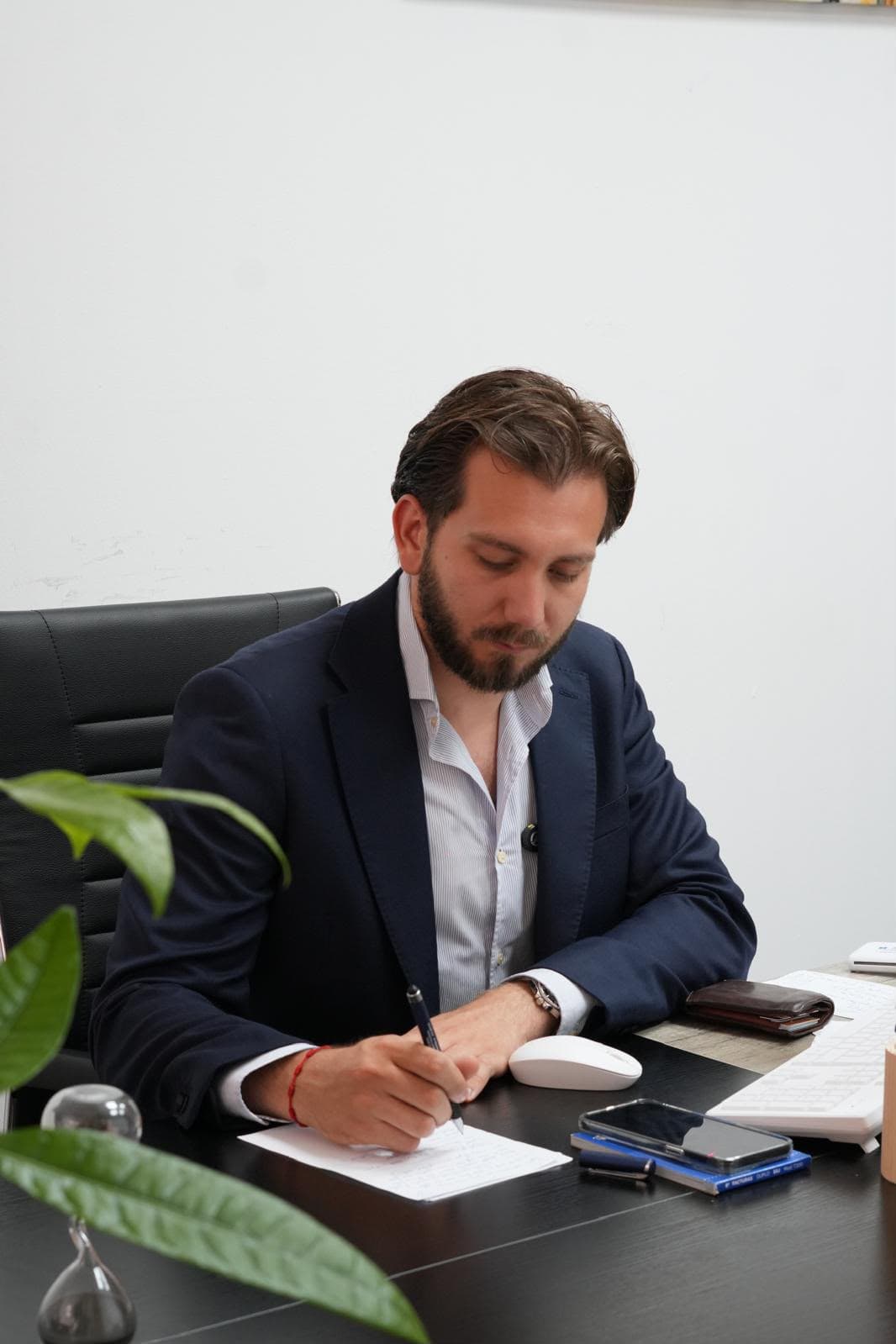
Reviewed by a lawyer
Reviewed by Alberto García López
Immigration lawyer · ICA Málaga, reg. no. 11.441
We check every page against current Spanish law. This is general information, not advice on your individual case.
Globalium is an independent law firm, not a government agency, and is not affiliated with or endorsed by any public administration. Visas, permits and identification numbers are granted solely by the Spanish authorities, and you are free to apply to them directly yourself. Our fees pay for legal advice and representation, and are separate from any official fee or tax.
Tell us what you do. We'll tell you which permit fits.
A straight answer on whether the self-employed route is yours, what the plan has to prove and how long it takes — before you book a flight or turn down a client.
+34 667 77 02 19 · infoglobalextranjeria@gmail.com
P.S. — «I'll just keep the Spanish clients off the books for now» is not a strategy either. It is a permit problem with a tax problem attached.