
The Spanish Digital Nomad Visa, applied for from America.
Same remote job, same clients, a considerably better February. What changes when you apply from the United States is the paperwork underneath: an FBI check with a federal apostille, the one consulate that covers your state, and an IRS that follows you across the Atlantic whether you invite it or not. We are Spanish immigration lawyers on the Costa del Sol, and we work in English.
Fifty euros — about fifty-five dollars, depending on what your card decides to do. Cheaper than the first hour of the accountant you'll ring afterwards anyway.
Three things that only bite US applicants
The visa conditions are the same for everyone: remote work for a company or clients outside Spain, roughly 200% of the Spanish minimum wage in income, a degree or three years' experience, private health cover, a clean record. Those are set out in full on the main Digital Nomad Visa page. These three are the ones that are yours alone.
The FBI check is the long pole
Spain wants a federal criminal-record certificate — the FBI Identity History Summary — apostilled by the US Department of State and then translated by a sworn translator. A state police check will not do. Neither will a background-screening website. This step quietly sets your timeline, so it is the first one we start.
Your consulate is assigned, not chosen
Spain runs nine consular posts in the United States, each covering a defined group of states, and you file at the one covering where you legally live — not the one with the friendlier appointment calendar. Honorary consulates cannot take a visa application at all. We confirm your post before you book anything.
The IRS does not care that you moved
The United States taxes its citizens on worldwide income wherever they live. Becoming a Spanish tax resident does not end your US filing obligation — it adds a second one, plus the treaty, the foreign earned income exclusion or foreign tax credit, and FBAR. It also complicates whether the Beckham Law is actually a win for you. This tends not to appear in the visa brochure.
Income thresholds are fixed in euros by current Spanish law and verified at the time of application. Any dollar figure on this page is an indication, not a promise the exchange rate intends to keep.
FBI check, federal apostille, sworn translation
In that order, and only in that order. Each link is issued by a different office, and none of them can start until the one before it is finished.
Order the FBI summary
Requested directly or through an FBI-approved channeler. Electronic delivery is quick; what follows is not, so this goes first while everything else runs in parallel.
Apostille it federally
A federal document is apostilled by the US Department of State, not by your Secretary of State. Documents issued by a state — a marriage certificate, say — go to that state instead. Sending the right paper to the wrong office is the classic lost month.
Sworn translation
Spain accepts translations by a traductor jurado appointed by the Spanish Ministry of Foreign Affairs. A certified US translation is not the same animal, and swapping one for the other invites a rejection.
File and follow
We assemble the file, act as your legal representative and answer whatever the authorities ask. The decision is theirs; the argument is ours.
Nine consulates, and only one of them is yours
Spain's consular network covers the United States between these posts. Each has its own jurisdiction, its own appointment queue and its own view on how a file should be presented. You apply at the one covering where you legally reside; a file lodged at the wrong post comes back, minus the weeks.
- Washington, DC
- New York
- Boston
- Chicago
- Houston
- Miami
- Los Angeles
- San Francisco
- San Juan, Puerto Rico
Honorary consulates cannot accept a visa application. Jurisdictions and appointment procedures are set by each post and do change — we confirm yours before you buy a single apostille.
Or don't file in America at all
Americans may enter Spain visa-free as visitors for up to 90 days, and the Digital Nomad Visa can be applied for from inside Spain during a lawful stay. The two routes do not produce the same result: the consular route typically yields a one-year visa you convert on arrival, while the application filed in Spain is usually granted as a three-year authorisation. Which is right for you depends on your employer, your family and your calendar — and deciding it late is expensive, because the document lists differ.
You don't swap the IRS for the Agencia Tributaria. You collect both.
The United States taxes citizens on worldwide income regardless of where they live, so moving to Spain adds a Spanish return rather than replacing an American one. Double taxation is then relieved through the US–Spain treaty and through the foreign earned income exclusion or the foreign tax credit, while reporting obligations such as FBAR and FATCA carry on in the background.
This is also where the Beckham Law stops being an obvious win. Broadly a flat 24% on Spanish-source employment income up to €600,000 for up to six years, elected on Modelo 149 within a hard six-month window — excellent for many arrivals, but for someone still filing in the United States it has to be modelled against the foreign tax credit rather than admired on its own. A smaller Spanish bill and a larger American one is not a saving.
We advise on the Spanish side and coordinate with your US preparer rather than pretending to replace them. Figures are set by current legislation and confirmed for your case before you rely on them.
The man who brined the turkey afterwards
A friend of the firm hosted his first Thanksgiving. He had read that brining is the secret, and he was right. He had also read it on the Wednesday evening, some hours after the bird went into the oven. Undeterred, he took the roasted turkey out, lowered it into a bucket of salted water and left it there overnight with the quiet confidence of a man following instructions.
Every individual step he performed was correct. He used the right salt. He measured. What he had was not a recipe problem but an order problem — a chain in which one link only works before another, and no amount of enthusiasm reopens a window that has closed.
Immigration files are brines. The criminal-record certificate has to be current when it arrives, which means it cannot be ordered first and admired for four months. The apostille cannot precede the document. The Modelo 149 election has six months and not seven. Nobody has ever been refused for lack of enthusiasm.
What Americans actually ask us
Can Americans get the Spain Digital Nomad Visa?
Yes. US citizens are non-EU nationals, which is exactly who the Digital Nomad Visa under the Startups Law (Ley 14/2013) was written for. You need genuinely remote work for a company or clients based outside Spain, income at roughly 200% of the Spanish minimum wage, a degree or three years of relevant experience, private health insurance and a clean federal criminal record. Americans are one of the largest groups using the route.
How much money do I need to show, in dollars?
The threshold is set in euros — around 200% of the Spanish minimum wage, roughly €2,850 a month at current figures, which lands somewhere near $3,100–3,300 depending on the exchange rate on the day. There is an uplift for a spouse and for each additional dependant. Because it is pegged to the minimum wage it moves, and the euro figure is the one that counts, so we confirm the exact number and the accepted proof at the time you apply.
Do I apply at a Spanish consulate in the US, or from inside Spain?
Both routes exist and they do not produce the same thing. Filing at the consulate covering your state typically gets you a one-year visa that you convert once you arrive. Filing from inside Spain during a lawful 90-day stay is usually granted as a three-year authorisation. Which suits you depends on your job, your family and how quickly you need to move — it is one of the first things we work out on the call, because it changes the whole document list.
Do I still have to file a US tax return?
Yes. The United States is one of very few countries that taxes on citizenship rather than residence, so your obligation to file with the IRS follows you to Spain. What changes is how double taxation is relieved — through the US–Spain treaty, the foreign earned income exclusion or the foreign tax credit — plus reporting such as FBAR and FATCA where it applies. This interacts with the Beckham Law in genuinely case-specific ways, and it is the single thing Americans are most often given a breezy wrong answer about.
Is the Beckham Law worth it for a US citizen?
Sometimes, and less often than the internet suggests. Spain’s inbound-worker regime is broadly a flat 24% on Spanish-source employment income up to €600,000 for up to six years, with a strict six-month election window on Modelo 149. For someone who still files in the United States, the calculation has to be run against the foreign tax credit and the treaty rather than in isolation — a lower Spanish bill is not automatically a lower total bill. We screen for it on day one instead of discovering it in year two.
Which criminal-record check does Spain accept?
The federal one: the FBI Identity History Summary, apostilled by the US Department of State and accompanied by a sworn translation into Spanish. State-level police certificates and commercial background reports are routinely rejected. Certificates also age — they must be recent when the file is presented, which is why we sequence them rather than gathering everything at once and watching the first document expire.
Coming from Canada instead? The Canadian route has its own paperwork.
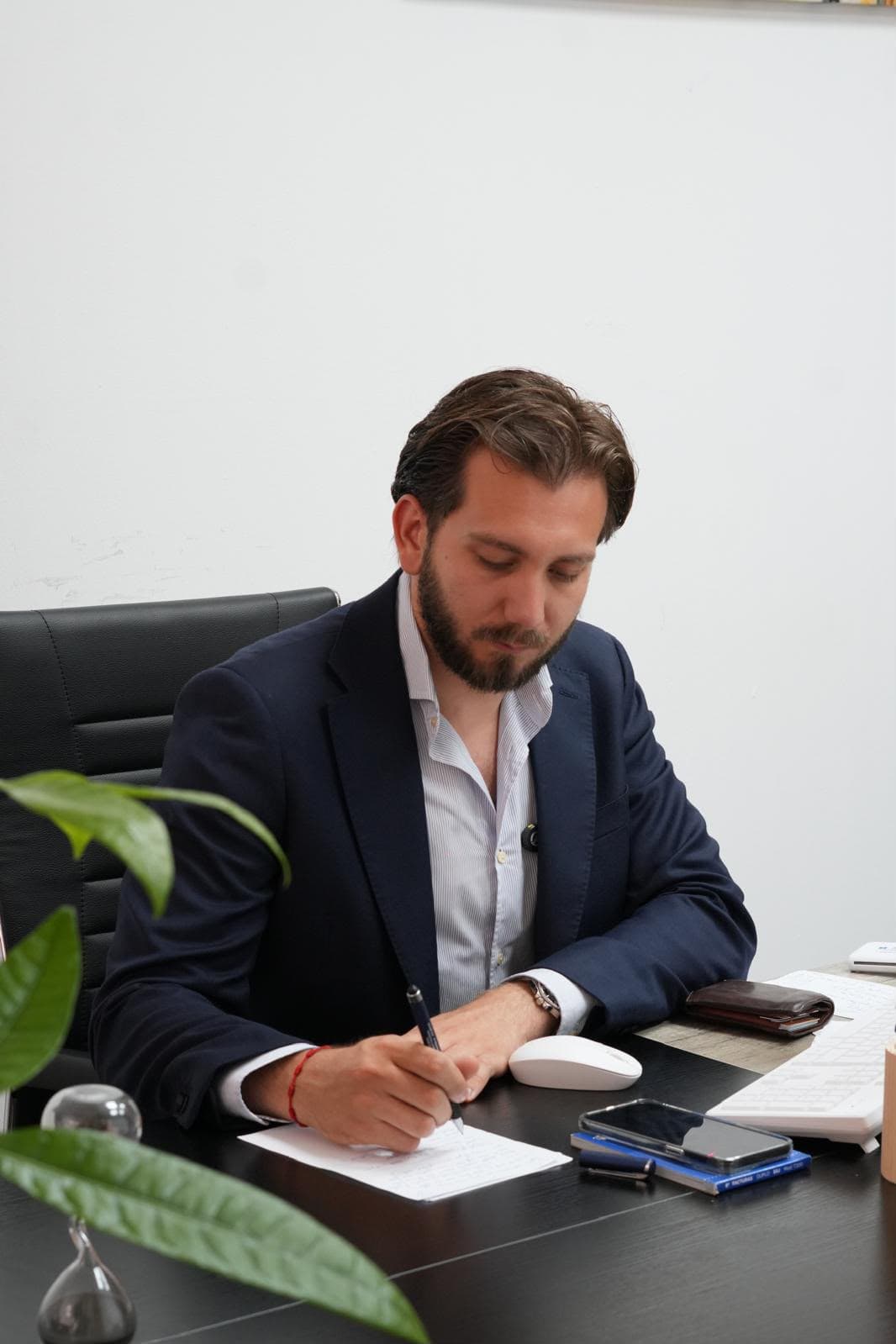
Reviewed by a lawyer
Reviewed by Alberto García López
Immigration lawyer · ICA Málaga, reg. no. 11.441
We check every page against current Spanish law. This is general information, not advice on your individual case.
Globalium is an independent law firm, not a government agency, and is not affiliated with or endorsed by any public administration. Visas, permits and identification numbers are granted solely by the Spanish authorities, and you are free to apply to them directly yourself. Our fees pay for legal advice and representation, and are separate from any official fee or tax.

Tell us the setup. We'll tell you if it flies.
A video consultation with a Spanish immigration lawyer, in English, for €50 — roughly $55 depending on your card. A straight answer on whether you qualify, which route fits and what it costs, before you order a single apostille.
+34 667 77 02 19 · infoglobalextranjeria@gmail.com
Globalium is a Spanish law firm based in Fuengirola, Málaga. We advise on Spanish immigration and tax law only; we are not admitted to practise law in any US state and do not give United States legal advice. Our lead lawyer, Alberto García López, is registered with the ICA Málaga under no. 11.441. Our office keeps Spanish hours (CET).
P.S. — the 90-days-in, 90-days-out shuffle is not an immigration strategy. It is a frequent-flyer scheme with worse rewards and a border guard attached.