
Get the children into the right Spanish school — not just any school.
State (público) or state-subsidised (concertado), on the Costa del Sol, through the Junta de Andalucía’s escolarización process. We read the catchment and the points before you sign a rental, get the documents apostilled and translated the way each school accepts, and file in the right window — so your child starts term with a desk, not a waiting list. In plain English.
You can pick the town, the house and the view. Whether your child gets into the school on the corner is decided by a points table — and the points started counting the day you chose the address.
What a Spanish school application actually needs
Four things carry the file. Get the address and the translations right early and the rest is process — leave them late and you’re fighting the calendar.
Empadronamiento at your address
Registering on the town-hall roll (padrón) proves where you live — and it drives the catchment part of the points system, which is usually the single biggest factor in which school your child is offered. First thing we sort, because everything else leans on it.
The child’s identity & family papers
Passport and NIE, birth certificate or libro de familia, and the vaccination record. Foreign documents generally need an apostille and a sworn translation into Spanish — get this wrong and the file stalls, so we tell you exactly what each school and each municipality will accept.
Previous school reports
Reports or a certificate from the current school, so the child is placed in the correct year group. Where the year cut-off differs from the UK, we flag it early — nobody wants a surprise about which curso their child lands in.
The application, in the right window
Admissions run through the Junta de Andalucía’s escolarización process, with a main application window (plazo de escolarización) usually in spring for the September start, plus mid-year admissions when you arrive off-cycle. Windows and points criteria change each year — we confirm the current ones for your municipality.
Application windows and the points criteria (baremo) are set by the Junta de Andalucía and change each year — we confirm the current ones for your municipality before you file.
From new address to first day of term
Where you’ll live, which schools
We map the state (público) and state-subsidised (concertado) schools around your address, read the catchment lines, and give you a realistic shortlist — not a wish-list — based on how the points actually fall for you.
Documents & translations
The exact list: empadronamiento, passport/NIE, birth certificate or libro de familia, vaccination record and school reports — apostilled and sworn-translated where needed, ordered in the right sequence so nothing waits on anything else.
File within the window
We lodge the application through the Junta de Andalucía escolarización process in the current plazo — or via mid-year admissions if you’ve arrived off-cycle — and track it through allocation so you’re not refreshing a portal at midnight.
Place confirmed, first term ready
Once the place is offered we complete matriculación (enrolment), sort the practicalities — books, meals, transport, the after-school comedor — and, if an international or bilingual school fits better, we say so honestly and point you to that route.
The questions parents ask first
When do I have to apply for a Spanish state school?
Admissions run through the Junta de Andalucía’s escolarización process. There’s a main application window (plazo de escolarización) usually in spring for the September start, plus mid-year admissions if you arrive during the school year. The exact dates move every year and by municipality, so we confirm the current window for your town before you plan flights and removals around it.
How are school places decided — can I just pick the one I want?
You list preferences, but places are allocated on a points system (baremo). The big factors are proximity/catchment — which is why your empadronamiento address matters so much — siblings already at the school, and other criteria the Junta sets. If a school is over-subscribed, points decide. We read how the points fall for your specific address before you commit to a rental, because the two decisions are linked.
What’s the difference between público, concertado and an international school?
A público school is fully state-run and free. A concertado is privately run but state-subsidised, often with modest fees and its own ethos, and it goes through the same escolarización process. International and bilingual schools are a separate, fee-paying route with their own admissions — a good fit for some families, especially mid-move or exam-year children. If that suits you better we’ll say so and hand you to our International School Guidance.
Which documents do I need, and do they need translating?
Typically: the empadronamiento, the child’s birth certificate or libro de familia, passport and NIE, the vaccination record, and previous school reports. Foreign documents generally need an apostille and a sworn (official) translation into Spanish. Getting the apostille and translation right — and in the right order — is where DIY applications usually stall, so we handle the sequence for you.
We’re arriving mid-year — is it too late?
No. Outside the main spring window there’s a mid-year admissions route for families who move during the school year. Places depend on what’s free locally, so it can be tighter, but children do get placed off-cycle regularly. The sooner we have your address and the papers moving, the more options stay open.
Will my child cope with lessons in Spanish?
Younger children tend to absorb the language remarkably fast, and many Andalusian schools run support for newcomers. Older or exam-year children are a more careful conversation — sometimes a bilingual or international school is the kinder call for a year or two. We give you a straight read on your child’s year group and options rather than a one-size answer.
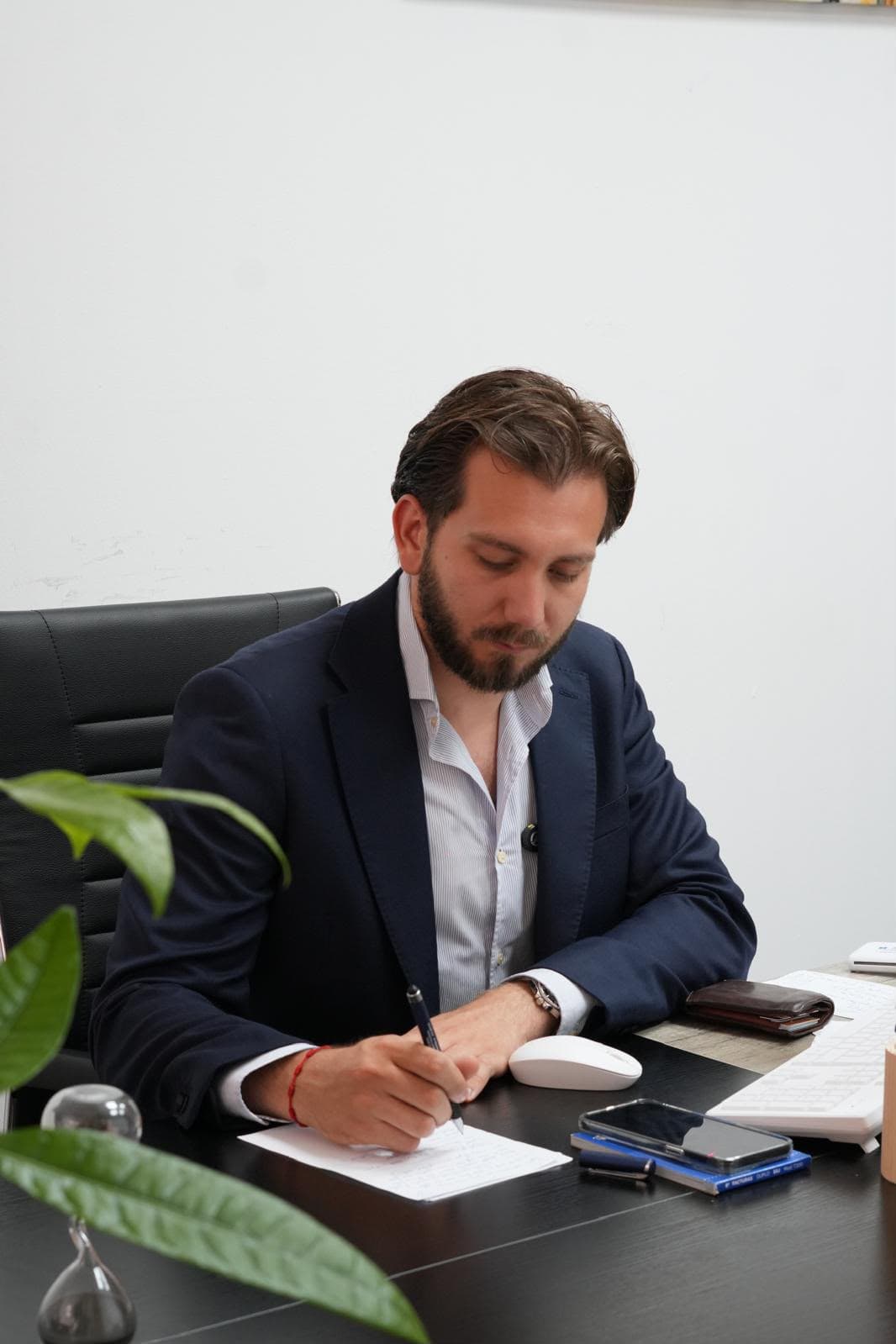
Reviewed by a lawyer
Reviewed by Alberto García López
Immigration lawyer · ICA Málaga, reg. no. 11.441
We check every page against current Spanish law. This is general information, not advice on your individual case.
Globalium is an independent law firm, not a government agency, and is not affiliated with or endorsed by any public administration. Visas, permits and identification numbers are granted solely by the Spanish authorities, and you are free to apply to them directly yourself. Our fees pay for legal advice and representation, and are separate from any official fee or tax.

Tell us the address. We’ll tell you the schools.
A straight read on which state and concertado schools your points actually reach, what the current window is, and what documents to start now — before you commit to a rental or a term date.
+34 667 77 02 19 · infoglobalextranjeria@gmail.com
P.S. — the move is meant to give your kids a Mediterranean childhood. It shouldn’t start with them at home in September because an apostille was a fortnight late.