
No probate here. But a six-month clock.
Handling a Spanish estate is nothing like the UK. There’s no probate — the heirs accept the inheritance before a notary — and the inheritance tax falls due within six months of the date of death. The good news: in Andalucía the bill is often far smaller than feared. We handle the whole thing, in plain English, so grief doesn’t come with a missed deadline.
Most of what people dread about a Spanish inheritance is the tax. Most of what actually costs them is the calendar.
Four things a Spanish inheritance asks of you
It’s a different process from home — notarial, not judicial — with one deadline that decides how much of it costs.
Death certificate & the paperwork trail
We gather the death certificate, the certificate from the Registry of Last Wills (Registro de Últimas Voluntades) and any Spanish will, then confirm exactly who inherits and what sits inside the Spanish estate — the flat, the bank accounts, the car. Nothing moves until the heirs and the assets are pinned down.
Accepting the inheritance before a notary
Spain has no UK-style “probate”. Instead the heirs formally accept the estate before a notary — the aceptación de herencia — in a public deed that lists the assets and shares them out. It’s the step that legally makes you the owner, and it’s done here, not in a probate registry.
The Impuesto sobre Sucesiones — within six months
The inheritance tax (Impuesto sobre Sucesiones y Donaciones) must be filed within six months of the date of death. A one-off six-month extension can be requested — but only if you ask within the first five months. Miss the window and the surcharges and interest start, whatever the bill turns out to be.
Re-registering the assets in your name
Once the tax is paid, the property is re-registered at the Land Registry and the banks release the accounts to the heirs. Until the register catches up, the estate is settled on paper but not in fact — so we see it through to your name on the title.
The inheritance tax deadline, the extension rules and the Andalucía allowances are set by current Spanish and regional law, and confirmed for your specific estate.
From the death certificate to your name on the title
Establish the estate & the heirs
We request the death certificate, check the Registry of Last Wills for a Spanish will, and confirm who inherits and what the Spanish estate contains — so the six-month clock is being run against a clear picture, not a guess.
Value, and check the Andalucía reliefs
We value the assets and apply the current Andalucía allowances and reliefs for close family. For many estates this is where the feared tax bill shrinks dramatically — but the return still has to be filed on time to claim it.
Accept the inheritance at the notary
We prepare and sign the aceptación de herencia — by power of attorney if you’d rather not fly over — so the assets are formally accepted and shared out in a notarised deed.
File the tax, then re-register
We file the Impuesto sobre Sucesiones inside the six-month deadline, pay what’s due, and then transfer the property at the Land Registry and release the bank accounts into the heirs’ names.
The questions we get first
Is there “probate” in Spain like in the UK?
No — Spain has no probate court or grant of probate. Instead the heirs formally accept the inheritance before a notary in a public deed known as the aceptación de herencia, which lists the assets and shares them among the heirs. That deed, together with the paid inheritance tax, is what lets you re-register the property and release the bank accounts. It’s a notarial process, not a court one, which is unfamiliar to most British families and is exactly where we step in.
How long do I have before the inheritance tax is due?
Six months from the date of death. The Impuesto sobre Sucesiones y Donaciones has to be filed within that window, and it’s the single deadline that catches people out — grief, distance and unfamiliar paperwork make six months pass quickly. You can request a one-off extension of a further six months, but only if you apply within the first five months. Leave it and the extension is no longer available, and surcharges and interest begin to run.
Andalucía inheritance tax sounds frightening — how bad is it really?
Usually far less than people fear. Andalucía has very large allowances and reliefs for close family — spouses, children and parents — so for many estates the actual tax due is a small fraction of the headline, and sometimes close to nothing. The important thing is that the relief is claimed on a return filed on time; the deadline still bites even when the bill is modest. We calculate your specific position rather than let you worry about a number that may not apply to you.
What happens if we miss the six-month deadline?
The return can still be filed late, but the tax authority adds surcharges and interest for late payment, and if they chase it before you file, the penalties are heavier. The generous Andalucía reliefs still generally apply, so the underlying tax may remain low — but late filing turns a manageable formality into an avoidable extra cost. If death was recent, the kindest thing you can do for the estate is start early, even before you feel ready.
Do all the heirs have to travel to Spain to sign?
No. We can handle the whole process by power of attorney (poder), so the heirs need not fly over to accept the inheritance, sign at the notary, file the tax or re-register the property. For a family spread between the UK and Spain — often dealing with all this at a difficult time — that usually means we act on your instructions and keep you out of airports and Spanish queues.
What do I need to send you to get started?
To begin, the death certificate and whatever details you have of the Spanish assets — the property address or title, and the Spanish bank. We take it from there: checking the Registry of Last Wills for a will, establishing the heirs, valuing the estate and mapping the six-month deadline. You don’t need to have everything neatly assembled; the first job is often simply working out what’s there.
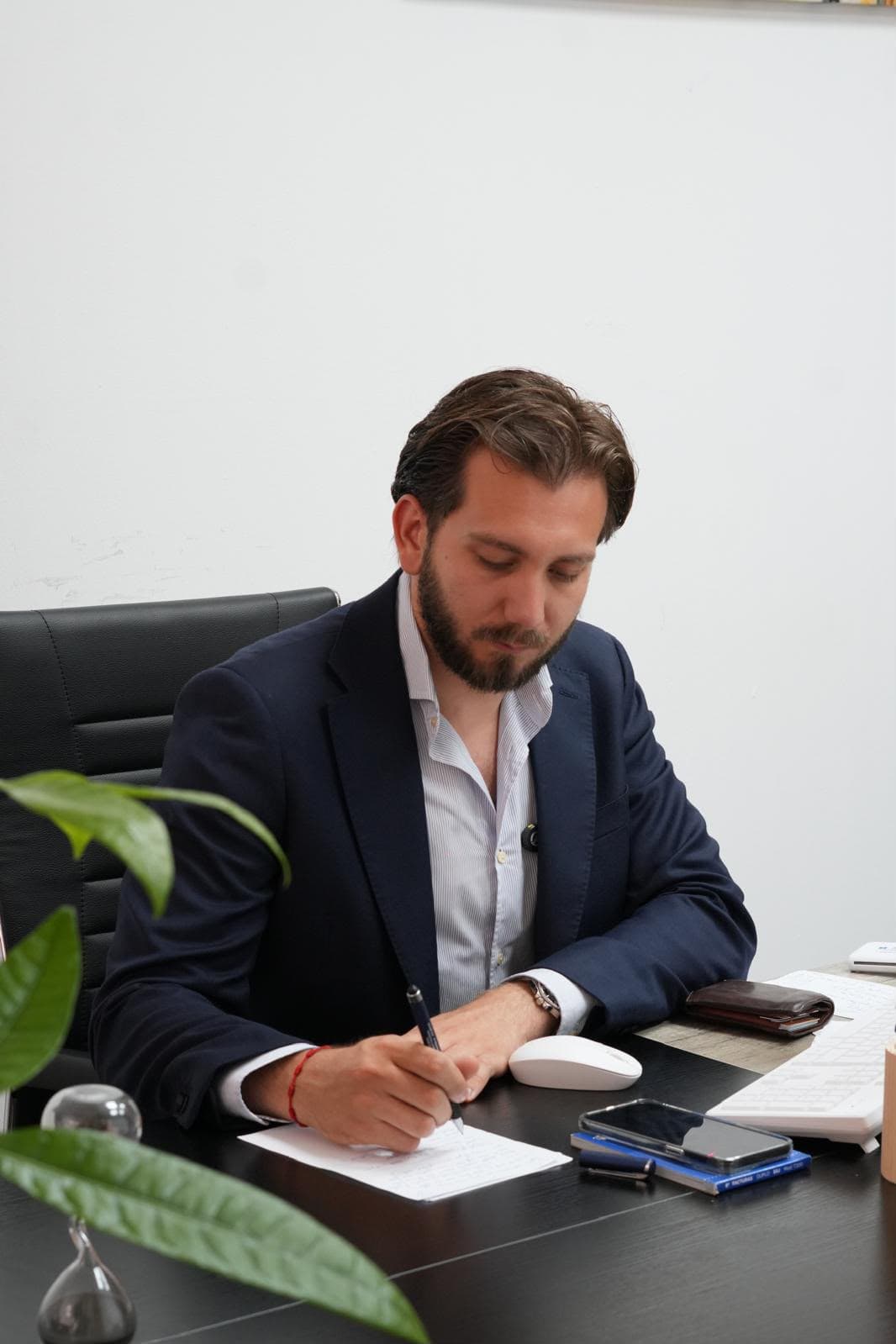
Reviewed by a lawyer
Reviewed by Alberto García López
Immigration lawyer · ICA Málaga, reg. no. 11.441
We check every page against current Spanish law. This is general information, not advice on your individual case.
Globalium is an independent law firm, not a government agency, and is not affiliated with or endorsed by any public administration. Visas, permits and identification numbers are granted solely by the Spanish authorities, and you are free to apply to them directly yourself. Our fees pay for legal advice and representation, and are separate from any official fee or tax.
Tell us what’s happened. We’ll carry the rest.
A calm, plain-English read on the Spanish estate — what needs doing, what the tax is likely to be after the Andalucía reliefs, and how long you have — with no pressure at a hard time.
+34 667 77 02 19 · infoglobalextranjeria@gmail.com
P.S. — you don’t have to feel ready to start. You just have to start before the six months do. Everything after that, we can hold for you.