
Your health card — a family doctor, not a wall of paperwork.
Registering for Spain’s public health system on the Costa del Sol — the Servicio Andaluz de Salud, or SAS — and walking out with your tarjeta sanitaria and a doctor at your local centro de salud. We work out your entitlement route, assemble the file and handle the registration, so it’s an appointment rather than an ordeal — in plain English.
You didn't move to the sun to spend a Tuesday morning being told, at the front of the queue, that you brought the wrong piece of paper.
Registering for the SAS, in plain English
Four things do it. The one people trip over is the third — the entitlement route — because it's the one that depends entirely on who you are.
Proof you live here (empadronamiento)
Your padrón certificate from the town hall — the same one you registered for when you arrived — showing your address on the Costa del Sol. This is what ties you to a local centro de salud and, in turn, to a family doctor.
NIE or TIE
Your foreigner’s identity number, and if you’re resident, the physical TIE card. Everything in the Spanish system hangs off this number, and public health registration is no exception.
Your entitlement route
Cover usually comes through work — if you’re employed or self-employed and paying Seguridad Social, your número de afiliación (affiliation number) is the key. Others qualify through residence or reciprocal cover: UK state pensioners, for instance, can register on the strength of an S1 form. Routes vary — we confirm which one is yours before you queue.
The right entitlement document
Depending on your route, that means your social-security affiliation, an S1, or another entitlement paper. If you’re not yet entitled through any of these, the pay-in Convenio Especial is the route in — a separate service we also handle.
Entitlement routes and the documents that prove them vary from person to person — we confirm yours before you register, so you queue once.
From «am I even entitled?» to a card in your hand
Work out your route
We look at how you’re living here — employed, self-employed, resident, pensioner — and pin down exactly which entitlement door is open to you. Get this wrong and you queue twice; we get it right the first time.
Assemble the file
Empadronamiento, NIE/TIE and your entitlement document — affiliation number, S1 or otherwise — checked and complete, so the paper doesn’t come back at you across the counter.
Register with the SAS
We handle the registration with the Servicio Andaluz de Salud and your assignment to a local centro de salud. You come out with a family doctor and a paediatrician for the children, not a ticket to come back next week.
Your tarjeta sanitaria
The health card itself — the tarjeta sanitaria that lets you book appointments, get prescriptions and be seen. We make sure it’s issued and working, and tell you what to carry until the plastic arrives.
The questions we get first
Who can register for public healthcare in Spain?
Entitlement usually comes one of two ways. If you work here — employed or self-employed and paying Seguridad Social contributions — you’re covered through that. If you don’t work, you may qualify through residence or through reciprocal cover: UK state pensioners, for example, can register using the S1 form. Entitlement routes vary case by case, so the first thing we do is confirm which one applies to you — rather than send you to a counter to be turned away.
What is the tarjeta sanitaria and how do I get it?
The tarjeta sanitaria is your public health card — the card that assigns you a family doctor at a local centro de salud and lets you book appointments and collect prescriptions. On the Costa del Sol it’s issued by the Servicio Andaluz de Salud (the SAS), the regional health service for Andalucía. You get it by registering with the SAS once your entitlement is established; we prepare the file and handle that registration.
I’m a UK pensioner — can I use the public system?
Often, yes, through reciprocal cover. State pensioners from the UK can obtain an S1 form, which lets you register for Spanish public healthcare with the cost covered under the reciprocal arrangement. You bring the S1 and your residence documents, and you register on that basis. Whether the S1 is the right route for you depends on your circumstances, so we check it before you rely on it — we don’t want you assuming cover you don’t have.
What documents do I actually need?
Typically your empadronamiento (padrón certificate), your NIE or TIE, and the document that proves your entitlement — your número de afiliación a la Seguridad Social if you’re covered through work, an S1 if you’re a covered pensioner, or the relevant paper for your route. Exactly which entitlement document applies varies with your situation, which is the part people get wrong on their own. We confirm your list before you set foot in the health centre.
What if I’m not entitled yet?
If none of the usual routes fit — you’re not working, not a covered pensioner, and residence alone doesn’t open the door — you’re not shut out. Andalucía runs a pay-in scheme, the Convenio Especial, that lets you buy into the public system for a monthly fee. It’s a separate service, and one we handle too, so we can point you to it and set it up rather than leave you uncovered.
Do I still need private health insurance?
It depends on your situation. Some visa routes require a private policy regardless of anything else — the Non-Lucrative Visa is the classic example — so you may hold private cover to satisfy a visa and register for public cover once you’re entitled to it. Others are covered purely by the public system. We look at your immigration position and your entitlement together, so you carry the cover you actually need and not two policies you don’t.
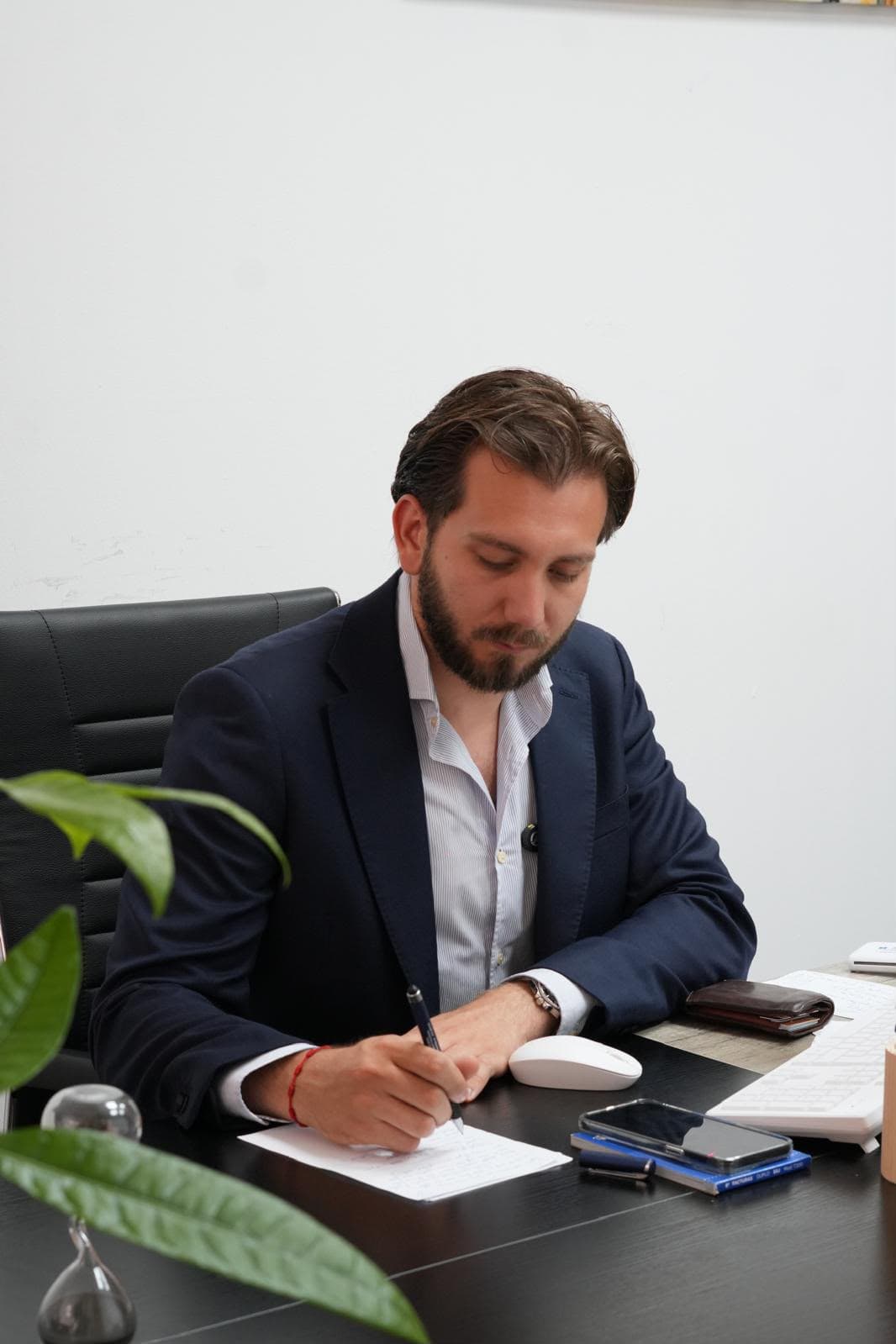
Reviewed by a lawyer
Reviewed by Alberto García López
Immigration lawyer · ICA Málaga, reg. no. 11.441
We check every page against current Spanish law. This is general information, not advice on your individual case.
Globalium is an independent law firm, not a government agency, and is not affiliated with or endorsed by any public administration. Visas, permits and identification numbers are granted solely by the Spanish authorities, and you are free to apply to them directly yourself. Our fees pay for legal advice and representation, and are separate from any official fee or tax.
Tell us how you live here. We'll find your route in.
A straight answer on whether you're entitled, which document proves it, and what to do if you're not there yet — before you ever join a queue.
+34 667 77 02 19 · infoglobalextranjeria@gmail.com
P.S. — the point of a health card is that a chest infection in February is a phone call and a prescription, not a research project into Andalusian bureaucracy while you're running a temperature.