
Leave your Spanish estate exactly as you mean to.
Own a home or assets in Spain? Under Brussels IV (EU Regulation 650/2012) you can elect the law of your own nationality — opting out of Spanish forced heirship, la legítima — and spare your heirs a probate of translations and apostilles. We draft it, notarise it and register it. In plain English.
A will is the one document you never get to see used. The kindest thing you can do is make the day it’s needed the easy part.
Four reasons it’s worth the afternoon
Owning something in Spain changes the maths of your estate. A Spanish will, drafted under Brussels IV, is how you keep control of it.
Your assets are in Spain
A holiday home, a bank account, a car in the garage — anything you own here sits under Spanish succession rules unless you say otherwise. A Spanish will deals cleanly with the Spanish estate, in the country where the property and the paperwork actually live.
Brussels IV lets you choose your law
EU Regulation 650/2012 — “Brussels IV” — lets a foreign national elect the law of their nationality to govern their whole estate. For a British owner that means English (or Scottish) succession rules can apply instead of Spanish ones, so you decide who inherits rather than the Civil Code deciding for you.
It opts you out of la legítima
Spanish law reserves a fixed share of the estate for certain heirs — the forced heirship known as la legítima — which can override what you actually want. Electing your national law in the will is how you step outside that regime and leave your Spanish estate as you intend.
It spares your heirs a probate nightmare
With no Spanish will, your family faces sworn translations, apostilles and a foreign grant of probate before they can touch the Spanish asset — months of cost and delay at the worst possible time. A Spanish will, registered here, makes succession far faster and cheaper.
The right to elect your national law comes from Brussels IV (EU Regulation 650/2012); how it interacts with la legítima and your home-country will is confirmed for your specific estate.
From your kitchen table to the register
Take stock & choose the law
We map exactly what you own in Spain and confirm the succession law of your nationality that you want to govern the estate — the Brussels IV election that sits at the heart of the will.
Draft in two languages
We draft the will in Spanish with a parallel English column, so you sign knowing precisely what it says. It’s written to cover your Spanish estate and to sit alongside — never contradict — your home-country will.
Sign before a notary
The will is signed before a Spanish notary (notario), who confirms your identity and capacity and holds the original. We arrange the appointment and interpret throughout, so nothing is lost in translation.
Register it
The notary records it in the Registro de Últimas Voluntades — the central register of last wills — so that when the time comes your heirs, and their lawyer, can find it at once and act on it.
The questions we get first
Do I need a Spanish will if I already have a UK one?
You don’t strictly need one, but it saves your family real time, cost and stress. A UK will can govern your Spanish assets, but to use it here your heirs must have it translated by a sworn translator, apostilled and recognised — a slow, expensive process at a hard moment. A separate Spanish will, dealing only with your Spanish estate and written to complement your home-country will, sidesteps all of that. The two should sit side by side, not on top of each other.
What is Brussels IV and how does it help me?
Brussels IV is the nickname for EU Regulation 650/2012 on cross-border succession. Its key gift to expats: you can elect the law of your nationality to govern your entire estate, rather than the law of the country where you’re resident. For a British national living in or owning property in Spain, that means you can have English or Scottish succession rules apply instead of Spanish ones — so you decide who inherits, within your own familiar legal framework. We put that election clearly into the will.
What is la legítima — the Spanish forced heirship?
Spanish succession law reserves a set portion of your estate for certain relatives — typically children and, in part, a surviving spouse. This is la legítima, the forced heirship, and it can override the wishes you’d take for granted at home, such as leaving everything to your spouse. By electing your national law under Brussels IV, you generally step outside la legítima for your Spanish estate and leave it as you actually intend. It’s one of the main reasons to make a Spanish will rather than rely on chance.
Will a Spanish will cancel my home-country will?
Not if it’s drafted properly, and that’s exactly the risk we guard against. A carelessly written “I revoke all previous wills” clause can wipe out your UK will by accident. We draft the Spanish will to deal only with your Spanish estate and to work alongside your home-country will, so the two cover different assets without contradicting one another. If you’re updating one, tell us about the other — the interplay is the whole point.
Where is the will kept, and how will my heirs find it?
The will is signed before a Spanish notary, who keeps the original and registers its existence in the Registro de Últimas Voluntades, the national last-wills register in Madrid. When someone dies, their lawyer checks this register to find whether a Spanish will exists and which notary holds it. That single step is why a properly notarised, registered will is found and acted on quickly, rather than lost in a drawer.
Can you handle the whole thing in English?
Yes. We’re a bilingual, colegiado firm on the Costa del Sol, so we take your instructions in plain English, draft the will bilingually and interpret at the notary. You sign a document you fully understand, elect the law you want and leave with a will that does what you meant — no guessing, no rough translations after the fact.
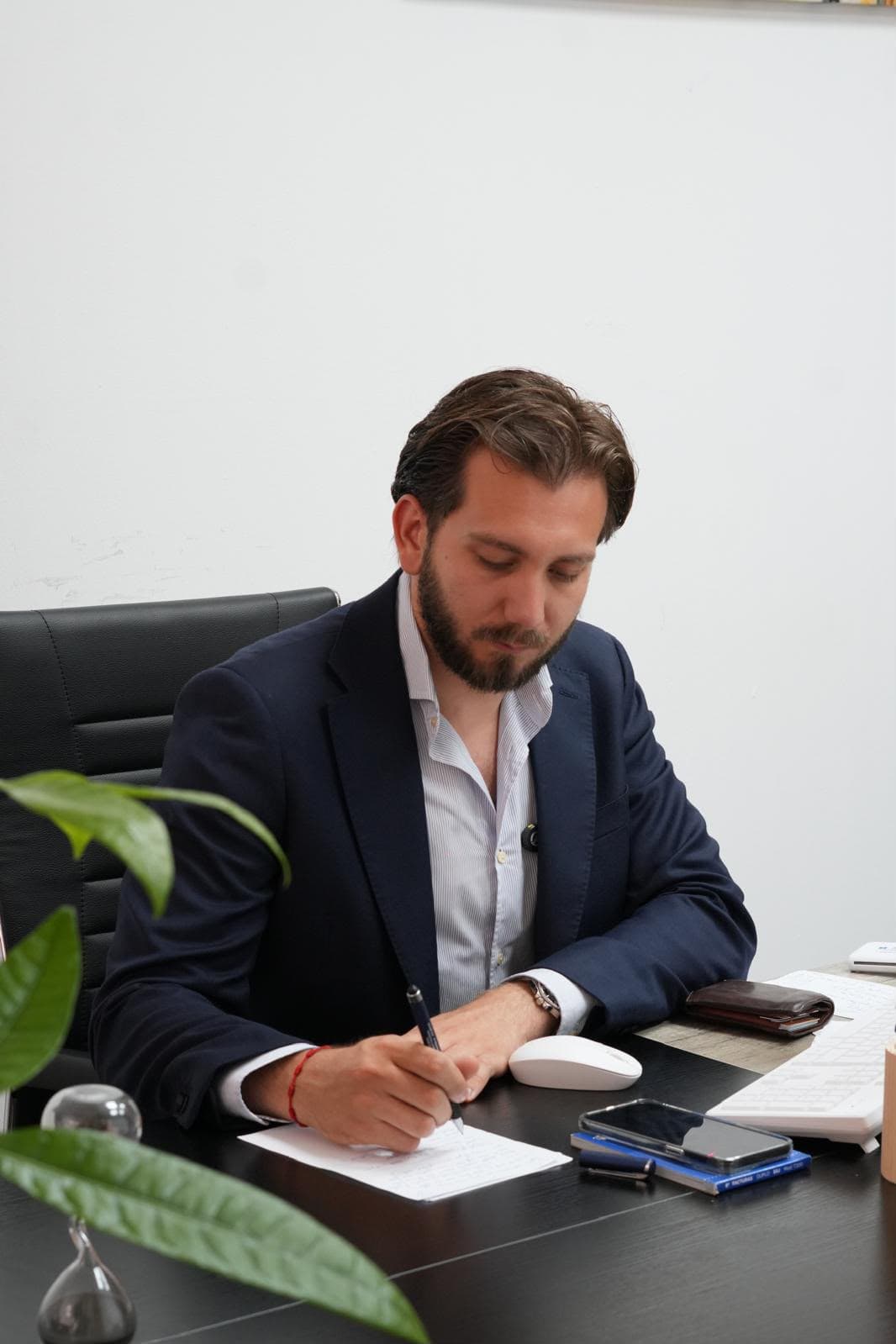
Reviewed by a lawyer
Reviewed by Alberto García López
Immigration lawyer · ICA Málaga, reg. no. 11.441
We check every page against current Spanish law. This is general information, not advice on your individual case.
Globalium is an independent law firm, not a government agency, and is not affiliated with or endorsed by any public administration. Visas, permits and identification numbers are granted solely by the Spanish authorities, and you are free to apply to them directly yourself. Our fees pay for legal advice and representation, and are separate from any official fee or tax.
Tell us what you own here. We’ll draft the will.
A clear plan for your Spanish estate — your national law elected under Brussels IV, drafted bilingually and registered — sitting neatly alongside your home-country will, not against it.
+34 667 77 02 19 · infoglobalextranjeria@gmail.com
P.S. — the Spanish will is an afternoon and a signature. The version where you didn’t make one is the version your family has to live through. Do the afternoon.